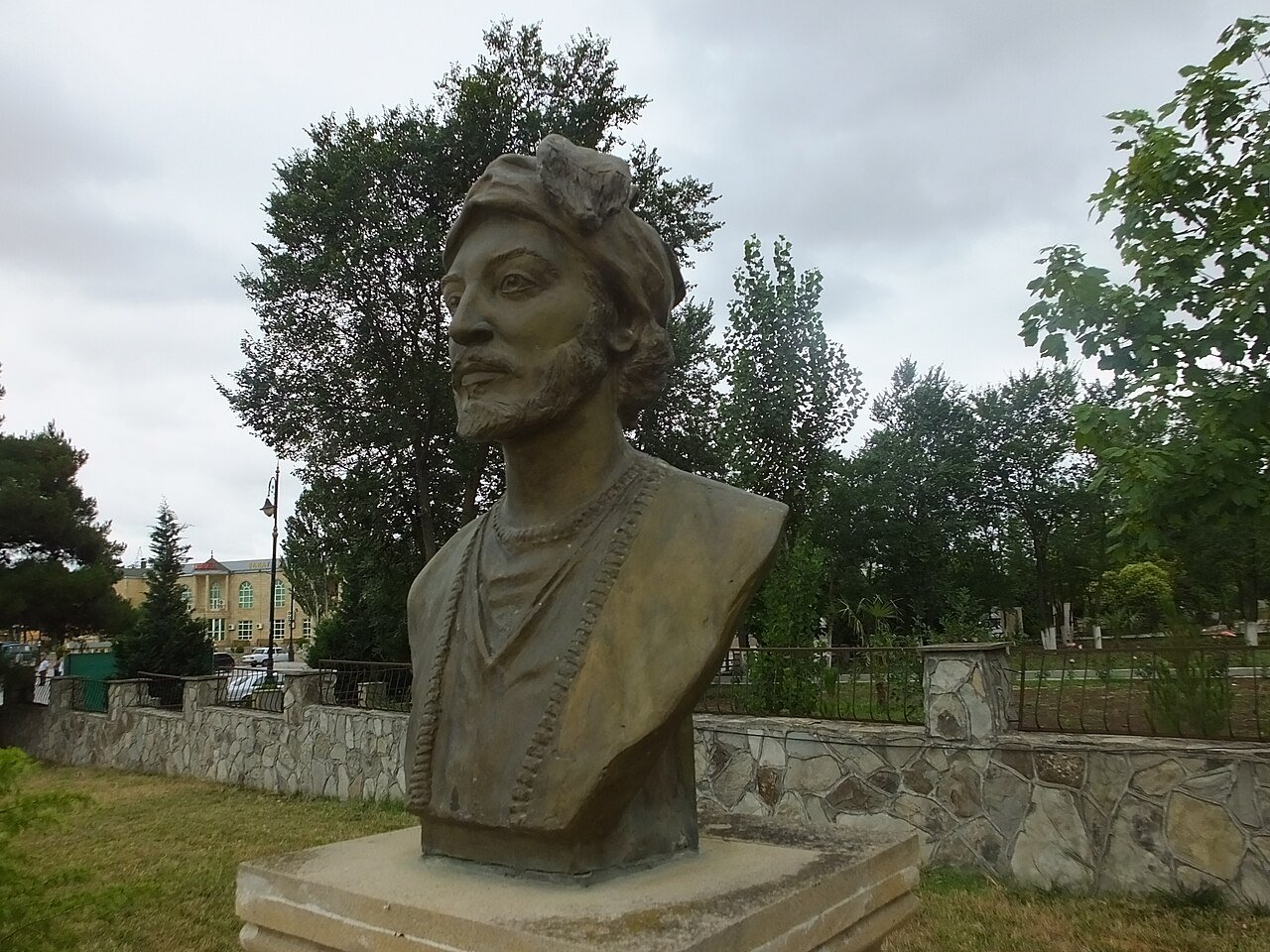
Muhammad ibn Sulayman, known by the pen name Fuzuli, was born around 1480 somewhere in Arab Iraq, then under Aq Qoyunlu rule. His exact birthplace is unknown. Najaf or Karbala are considered strong possibilities, while Baghdad, Hilla and Kirkuk have also been proposed. He came from the Bayat branch of the Oghuz/Turkmen communities settled in Iraq, so it is more accurate to identify Iraq, rather than any one disputed city, as his birthplace.
Fuzuli studied literature, poetry and languages as well as mathematics, astronomy, religious learning and philosophy. He wrote with distinction in Turkish, Persian and Arabic, and his known life unfolded around Najaf, Karbala, Hilla and Baghdad. For a time he served at the shrine of Imam Ali in Najaf. He witnessed Baghdad’s passage from Safavid to Ottoman rule in 1534. When an official stipend promised to him was delayed by the bureaucracy, he answered with the celebrated satirical prose letter Şikâyetnâme.
His writing joins human love to mystical suggestion and gives memorable expression to longing, pain, compassion and endurance. It influenced Azerbaijani, Iraqi Turkmen and Ottoman poetry for centuries. Fuzuli died during the plague epidemic of 1555–56, probably in Karbala; reports also place his burial there, although the precise grave site is not securely documented.